The Purple Guide has long been recognised as the UK events industry’s essential reference for planning safe and successful events.
The updated edition reflects the fast-changing realities of event management – from crowd safety and sustainability to emergency resilience and the growing use of digital planning platforms like OnePlan.
For event organisers, local authorities, and safety professionals, The Purple Guide is more than a compliance document — it’s a playbook for smarter, more collaborative planning. This blog post summarises the key things you need to know in The Purple Guide.
1. Understanding your site and audience
Everything begins with understanding the type of event, its audience, and the suitability of the chosen site.
Chapter 3 (Venue and Site Design) makes it clear: your layout, infrastructure, and operational design should reflect audience behaviour, scale, and site conditions.
Key takeaways:
Assess site suitability early: analyse terrain, gradients, sightlines, and access routes before committing to a location.
Collect data: pre-site inspections should capture crowd movement, utilities, welfare points, and emergency access.
Adapt design to audience profile: family-friendly events differ greatly from high-energy concerts or endurance races.
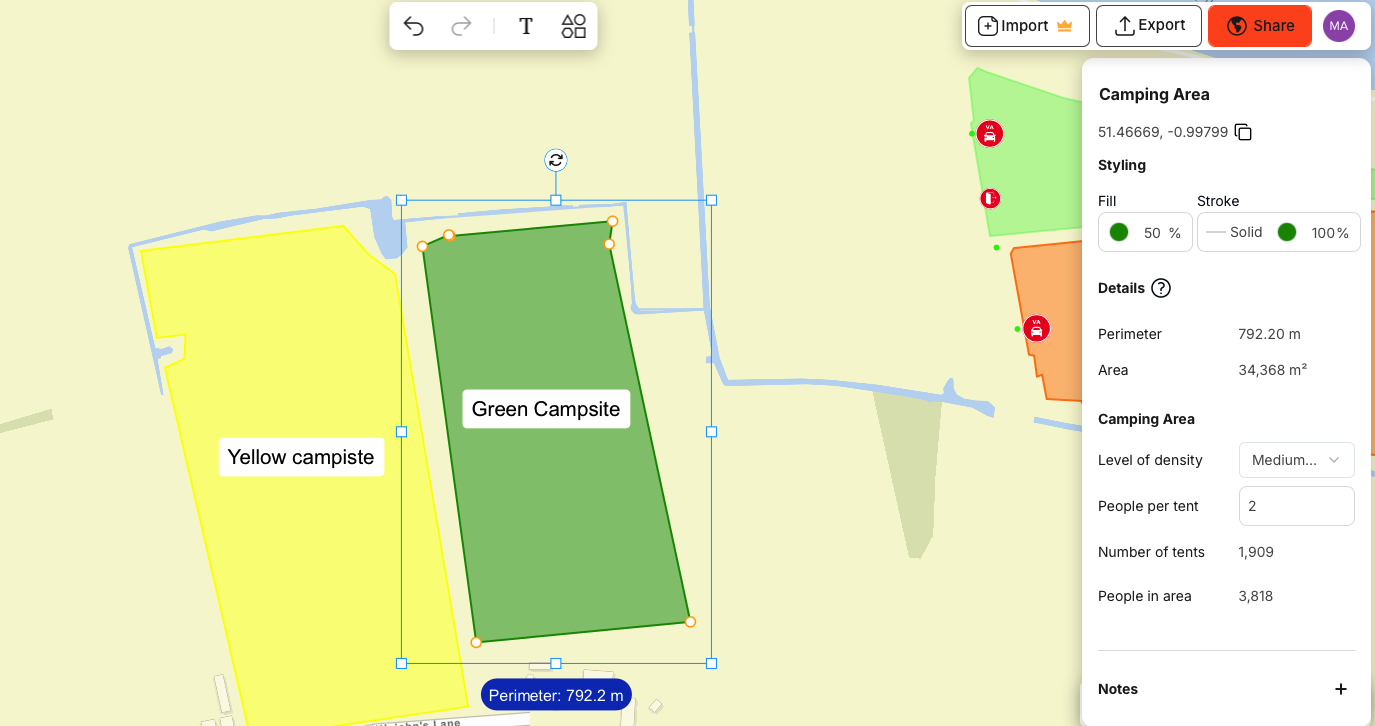
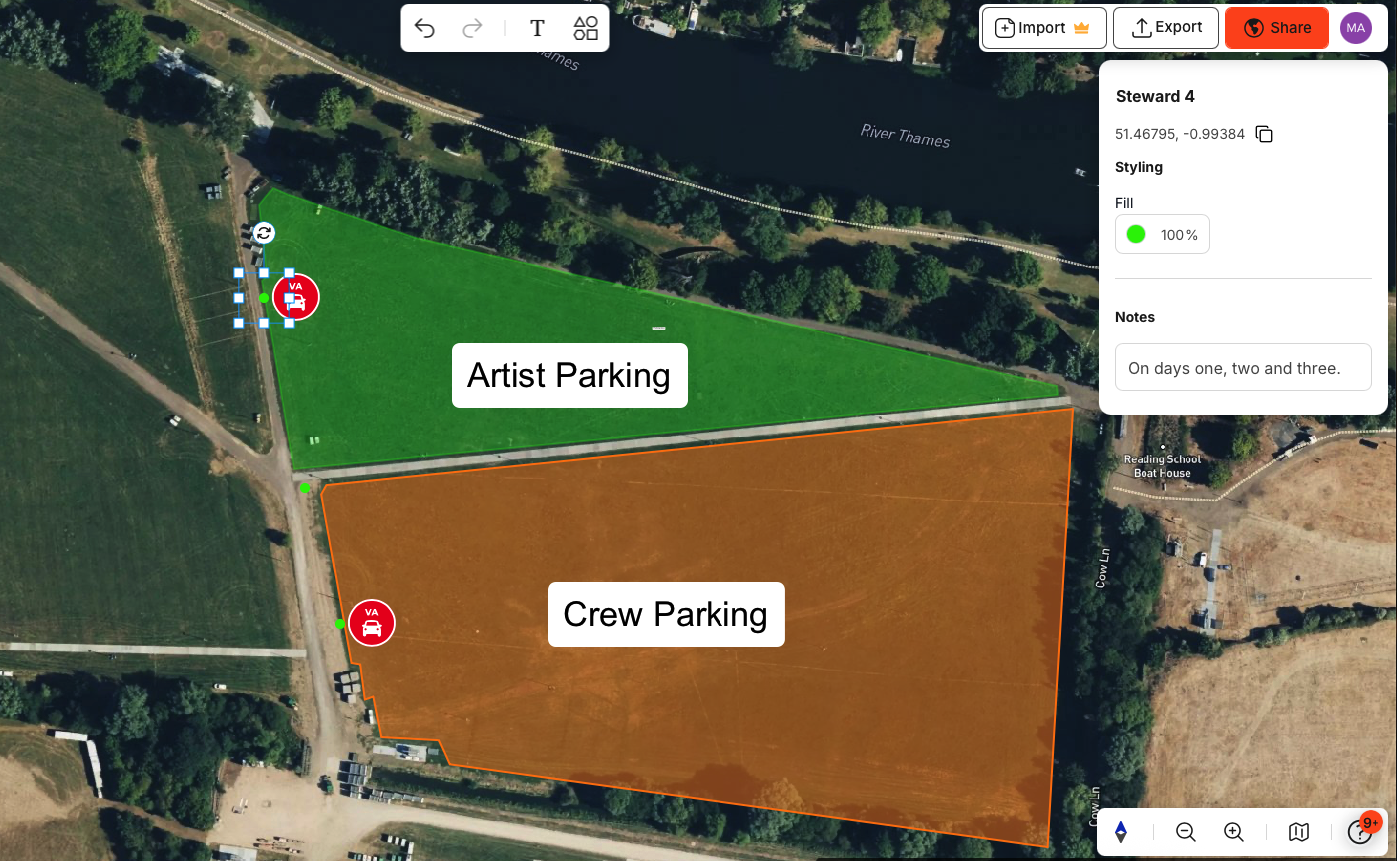
The Purple Guide emphasises that good site design prevents problems. Digital tools like OnePlan allow event organisers to test layouts, overlay crowd routes, and spot pinch points before build begins – saving time, money and stress.
2. Resilience and Emergency Planning
Chapters 4 and 26 address a core responsibility: resilience. Organisers must plan for disruption, whether it’s severe weather, crowd surges, or security threats.
Requirements include:
Defining an incident command structure using JESIP principles and the Joint Decision Model (JDM).
Preparing evacuation, invacuation, and lockdown strategies, supported by staff briefings and signage.
Establishing protected spaces for shelter or medical triage.
Holding multi-agency table-top exercises before major events.
This section closely aligns with the forthcoming Martyn’s Law (Protect Duty) – reinforcing that safety and security should be embedded in event design, not bolted on later.
3. Crowd Management
One of the Guide’s most detailed and practical chapters is on crowd management. This section reframes crowd management as a continuous system of design and operation, not a static plan.
Key principles include:
The DIM-ICE model (Design, Information, Management – Ingress, Circulation, Egress) remains the cornerstone of good practice.
Dynamic crowd management plans should evolve as site layouts or conditions change.
Organisers should model and monitor capacity, flow rates, and dwell times.
Crowd safety officers must be competent, with clear responsibilities and communication tools.

The guide highlights that crowd safety is central to the Protect Duty framework – every organiser has a proactive duty to design for safe movement. The guide states: “We’re not just moving people; we’re managing experiences and expectations.”
Platforms like OnePlan make this principle tangible – letting organisers map entry routes, overlay barrier lines, simulate flow, and plan for egress in real scale.
4. Medical provision and incident management
Chapter 5 details the Medical Needs Assessment, which must be tailored to audience demographics, weather, activity level, and duration.
The Guide expects:
Competent medical providers capable of first response within seconds.
On-site triage points and accessible routes for ambulances.
Regular rehearsal drills between medical and security teams.
A post-event report analysing incidents and response times.
Common triggers for incidents – such as heat, crowd density, alcohol, or spectator activity – can all be mitigated through smart planning and data-informed site layouts.
5. Temporary structures and working at height
Chapters 8 and 9 now explicitly tie temporary demountable structures (TDS) to the Construction (Design and Management) Regulations 2015 (CDM), recognising the scale and risk involved in temporary builds.
Organisers must:
Appoint competent designers and contractors at the planning stage.
Ensure each structure has a wind management plan, load calculations, and sign-off certificates.
Carry out ongoing inspections — especially after severe weather.
Keep full documentation available on site for safety officers and authorities.
This is an area where planning technology is increasingly used to visualise structural layouts and ensure clear separation zones, access routes, and crane swing areas.
6. Communication and control
Effective communication underpins every safe event.C The Purple Guide recommends robust systems for operational coordination, emergency response, and public information.
Key guidance:
Maintain two communication systems – radios (with trained users) and a reliable backup (PA, tannoy, or runners).
Avoid over-reliance on mobile networks, which often fail under high traffic.
Use shared digital maps and documentation to keep all teams aligned.
Prepare pre-scripted public announcements for evacuations, missing persons, or weather alerts.
Integrated control rooms should include safety, security, comms, and medical leads – each with clear sight of the live event plan.
7. Food safety and traders
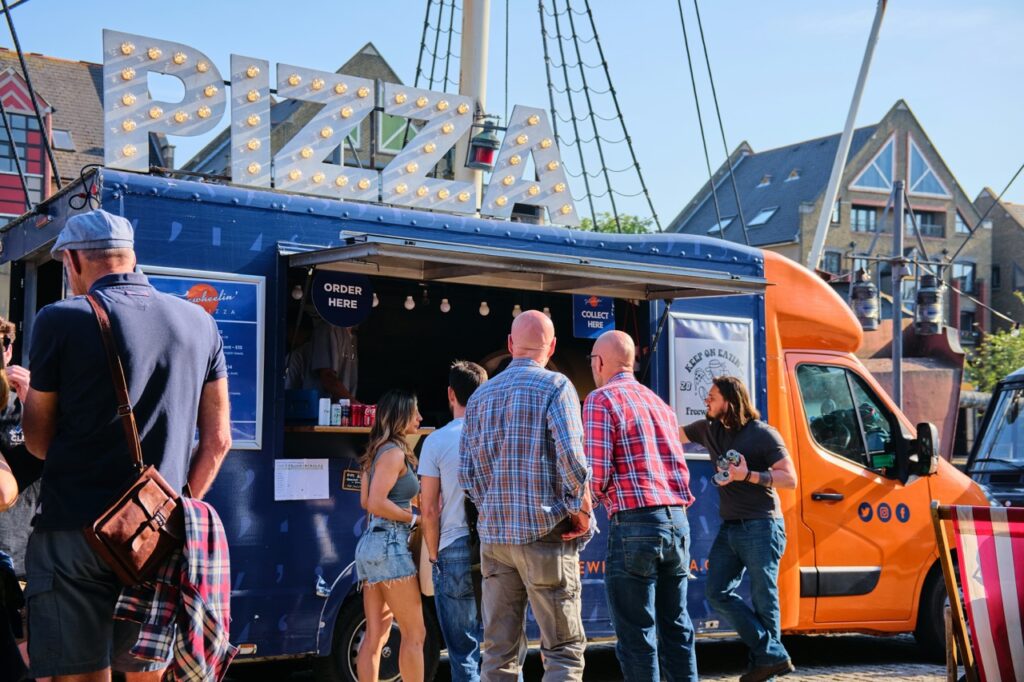
The guide reminds organisers they hold ultimate responsibility for ensuring traders and caterers operate safely.
Checks include:
Food Business Operator (FBO) registration.
Valid hygiene ratings and risk assessments.
Evidence of electrical safety (PAT) and LPG inspections.
Proper separation of cooking and fuel areas.
Firefighting equipment and emergency procedures in place.
Failure to verify traders’ credentials can invalidate an event’s insurance and licence – a common oversight the Guide warns against.
8. Sustainability and waste management
Environmental accountability is a major update in 2025, reflecting obligations under the Environment Act 2021.
Recommendations:
Separate food, recyclable, and general waste streams – measured by weight.
Eliminate single-use plastics (plates, cutlery, containers, straws).
Include waste reporting within contractor performance reviews.
Plan collection routes and back-of-house waste zones to reduce vehicle movement on-site.
Partnerships with certified waste contractors and transparent end-of-life reporting are now expected industry norms.
9. Security, policing, and drones
In chapters 25-28 of The Purple Guide, the advice reflects the evolving threat landscape for public events.
Organisers should:
Maintain close contact with Safety Advisory Groups (SAGs) and local police.
Follow advice from the National Events Intelligence Unit (previously Operation Gothic) for information sharing on artists or audiences with elevated risk.
Embed counter-terrorism awareness through training such as NaCTSO, Project Argus, and Project Griffin.
Implement clear drone restriction zones, backed by ticketing terms and visible signage.
Drone incursions are now classified as significant operational and reputational risks, particularly near crowded areas or stages.
See the ways OnePlan can support your event security planning.
10. Specialist event types
Later chapters of the Guide address niche but essential areas:
Animals at events – follow RSPCA and British Horse Society codes.
Fireworks and pyrotechnics – only by competent contractors with risk assessments and cleanup procedures.
Volunteer management – provide induction, welfare support, and defined reporting lines.
Accessibility – ensure routes, viewing areas, and facilities meet Equality Act requirements.
The Purple Guide in practice
The Purple Guide reinforces one clear principle: Safety management is a live process – not a static plan.
Every plan should be reviewed, tested, and updated as conditions change.
For organisers, the takeaway is to integrate safety, sustainability, and collaboration into one digital planning environment. Tools like OnePlan make this possible – providing a single shared map for crowd management, emergency response, contractor coordination, and event site information.
The content here has been summarised from The Purple Guide, published by the Events Industry Forum. Access the Purple Guide here >
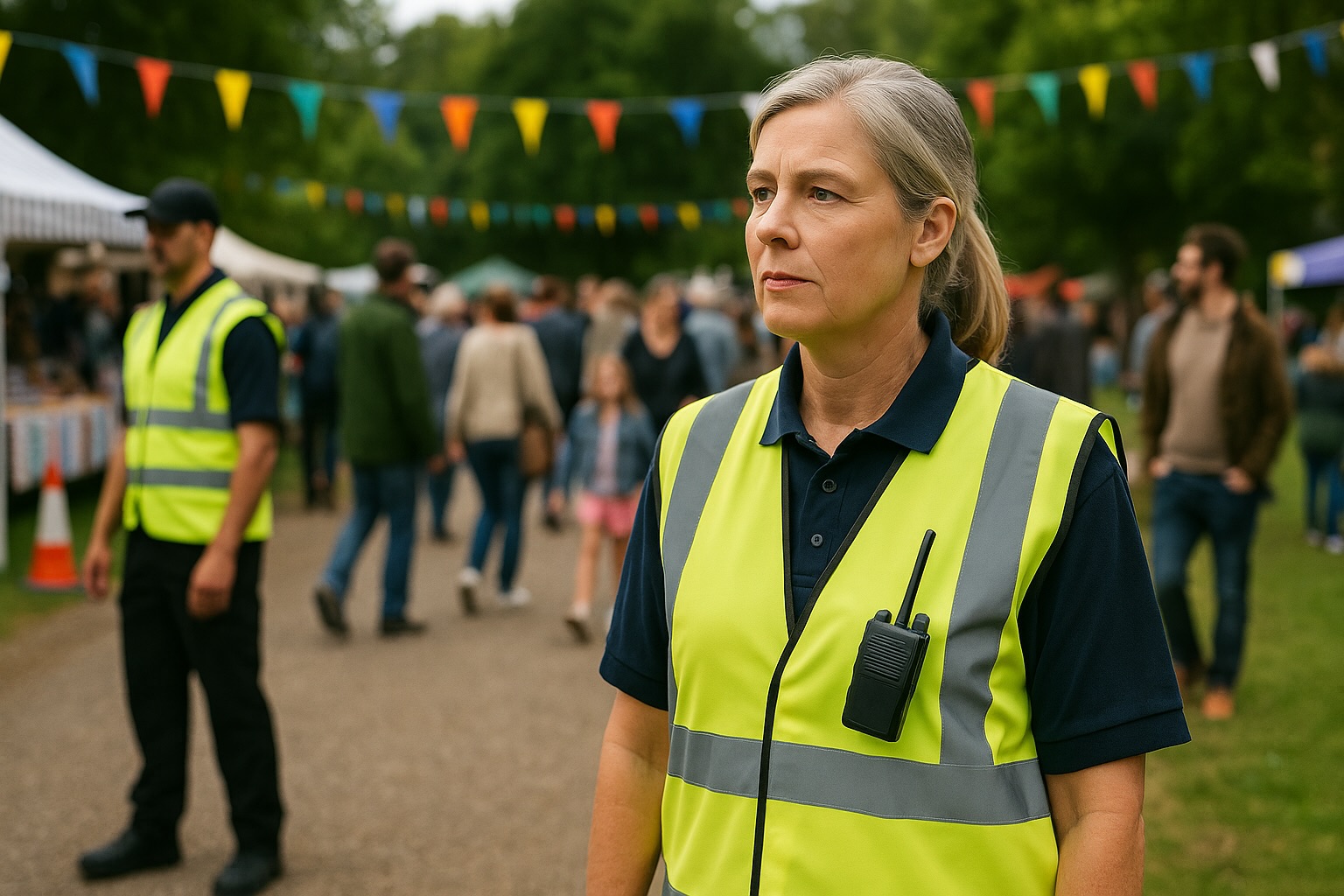
This article features an AI-generated image used for illustrative purposes only, at the top of the page. No real events or people are depicted in this image.