































How the Heritage Classic Foundation Eliminated 1,000 Vendor Calls and Emails a Year with OnePlan

Discover how the Heritage Classic Foundation centralised tournament planning for a 120,000-person PGA Tour event – eliminating around 1,000 vendor calls and emails a year in the process.
2026RBCHeritageSunday3361
1,000

phone calls and emails eliminated annually

120,000

attendees at the RBC Heritage each year

200,000

sq ft of temporary structure built across the course

The RBC Heritage Presented by Boeing is one of the PGA Tour’s most celebrated Signature Events. Held each April at Harbour Town Golf Links on Hilton Head Island, South Carolina, it welcomes approximately 120,000 attendees across tournament week. Behind it is the Heritage Classic Foundation, a small team responsible for planning and delivering every aspect of one of golf’s most logistically complex events.

Unlike many large sporting events, the RBC Heritage does not take place within a single open venue. Harbour Town Golf Links is a golf course woven through a residential community, with homes lining both sides of every hole. That creates a unique planning challenge, requiring infrastructure, hospitality spaces, utilities, broadcast facilities, and operational areas to be carefully positioned across a constrained and constantly evolving footprint.

As Caden Janzen, Operations Coordinator at the Heritage Classic Foundation, explains, “we do not necessarily have the normal footprint where they have one big open area. We are a golf course that has houses on both sides of every single hole,” he says, “and so when it comes to building and staging and everything, it can be a little more of a challenge.”

The scale of that challenge is considerable. Each year, the Foundation builds just under 200,000 square feet of temporary structures across the course, the equivalent of more than three and a half American football fields. The build process spans four months, while a year-round team of just 14 staff expands to around 2,000 people during tournament week, including approximately 1,800 volunteers alongside dozens of specialist contractors and vendors.

Coordinating that level of activity requires more than detailed plans. It demands a single source of truth that can be shared easily between internal teams, vendors, authorities, and commercial stakeholders, and that role is now filled by OnePlan.

The Challenge

Before adopting OnePlan, planning information was spread across multiple CAD drawings, images, and documents. For a team where everyone has responsibility for the entire venue, that fragmentation created constant friction in keeping plans aligned and up to date.

Caden describes the reality clearly, saying, “I touch every square inch of the course. My boss touches every square inch of the course. Our sales team touches every square inch of the course,” adding that “we’re all involved with everything.”

"Before OnePlan, it felt like we were managing a million separate files just to operate one event"

Caden Janzen,

Operations Coordinator, Heritage Classic Foundation

Without a shared, live view of the event, vendors frequently needed clarification on layouts, infrastructure locations, and site changes. Power and HVAC providers, telecommunications teams, TV broadcast crews, electrical contractors, and sanitation providers all relied on the operations team, which created a steady stream of calls and emails throughout the planning cycle.

Permitting added another layer of complexity. Plans submitted to the town of Hilton Head, along with fire and medical authorities, were typically shared as static documents that often required additional explanation.

As the tournament evolved, maintaining accuracy became even more difficult. Following a six-month course restoration project, even small physical changes began to impact planning assumptions.

“When you shut down for six months, a lot of things change,” Caden explains. “We are building around trees and taking trees into account, and when a tree moves over five yards or something, that might impede exactly where we are building something.”

Keeping drawings accurate became a continual process of updates, revisions, and communication.

"Operationally, we have probably eliminated approximately 1,000 phone calls and emails combined by using OnePlan"

Caden Janzen,

Operations Coordinator, Heritage Classic Foundation

A Single Source of Truth for Tournament Planning

Caden first came across OnePlan through his brother, who also works in the golf tournament industry. After seeing the platform, the fit was immediate. “I felt like it was a necessity for us,” he says, “and so we jumped on OnePlan a couple of years ago.”

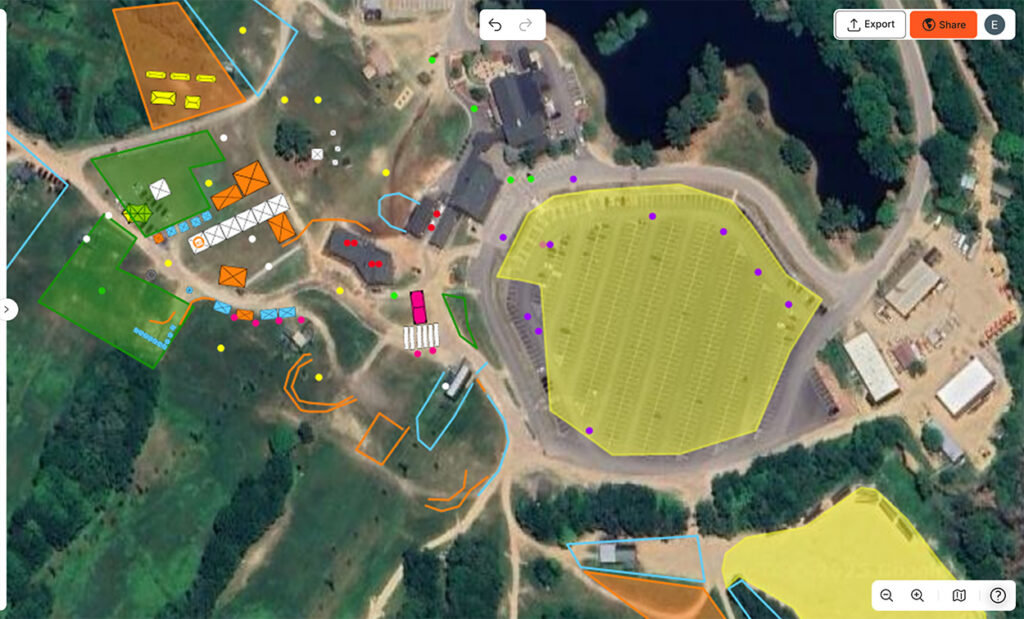
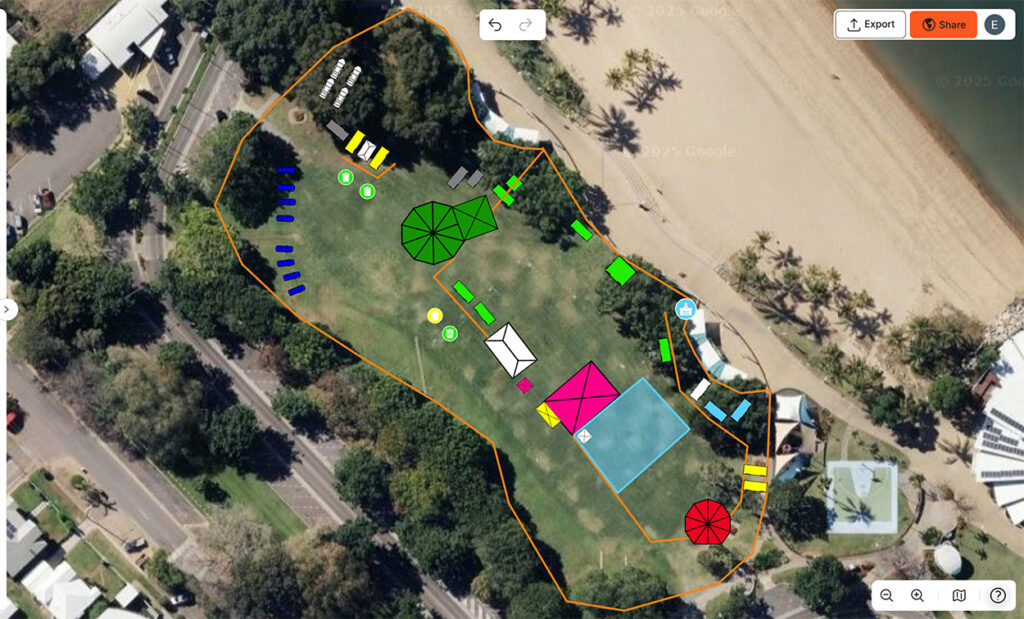
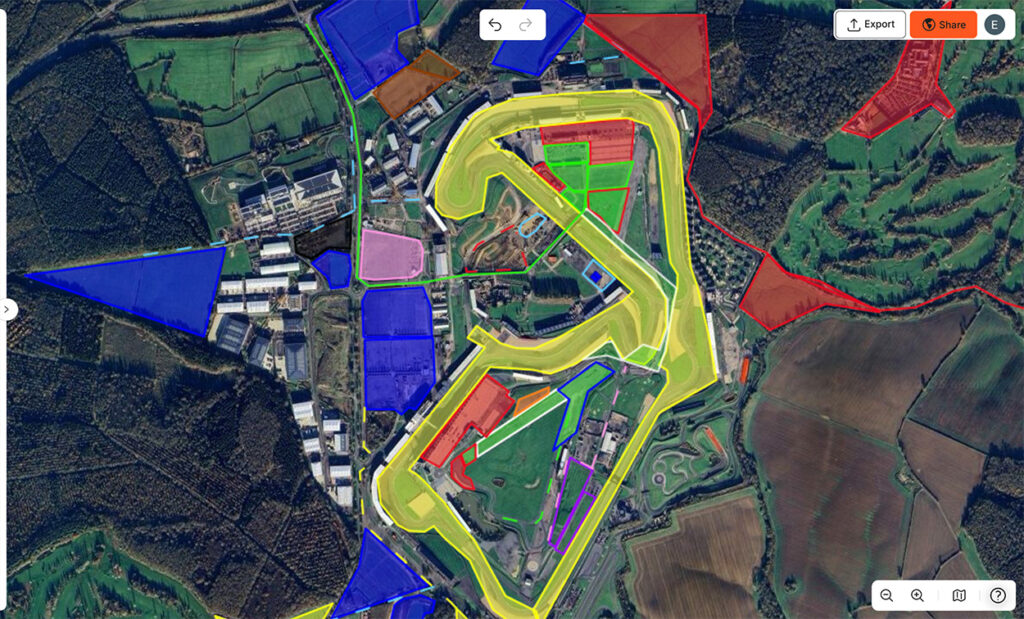
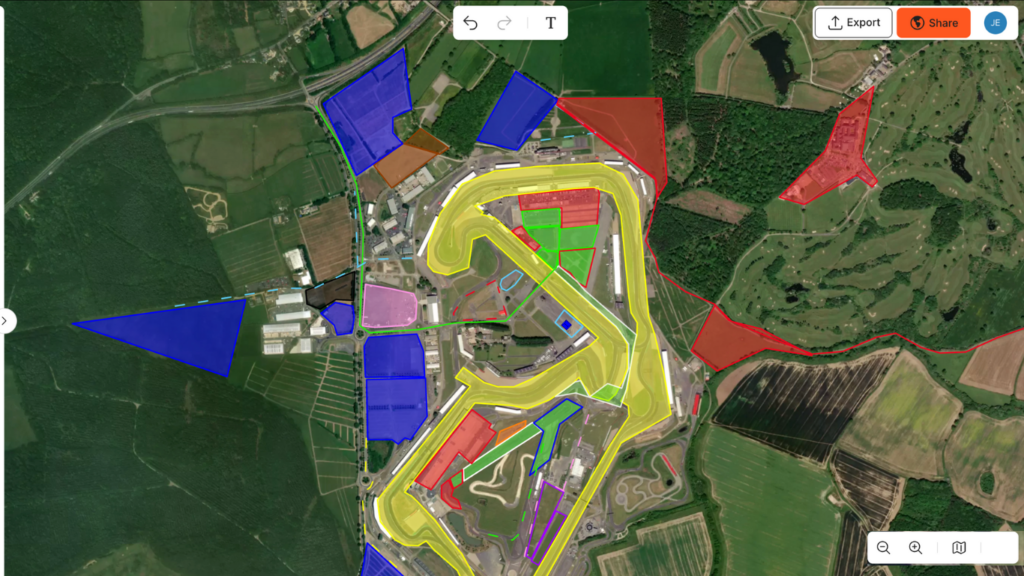
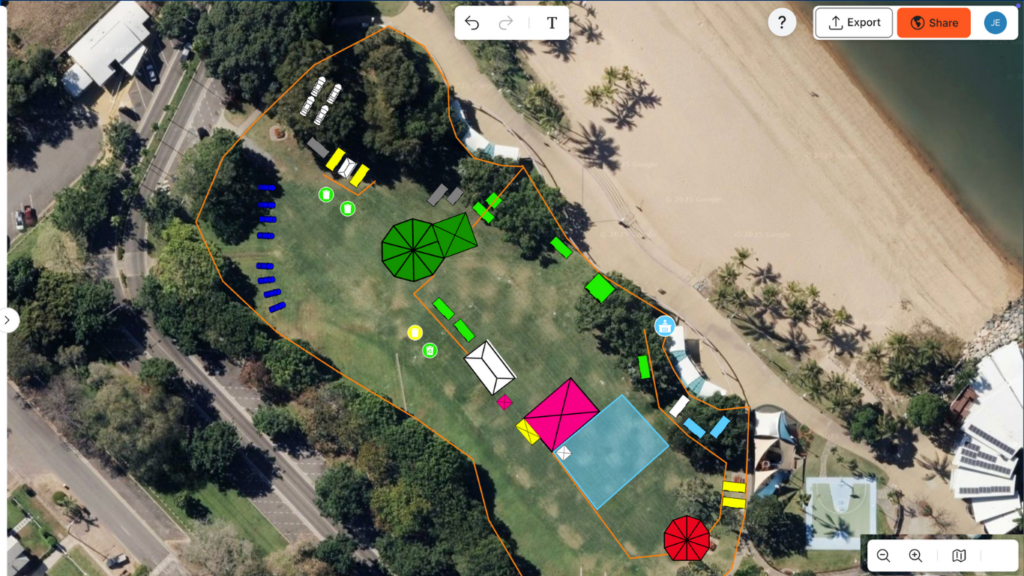
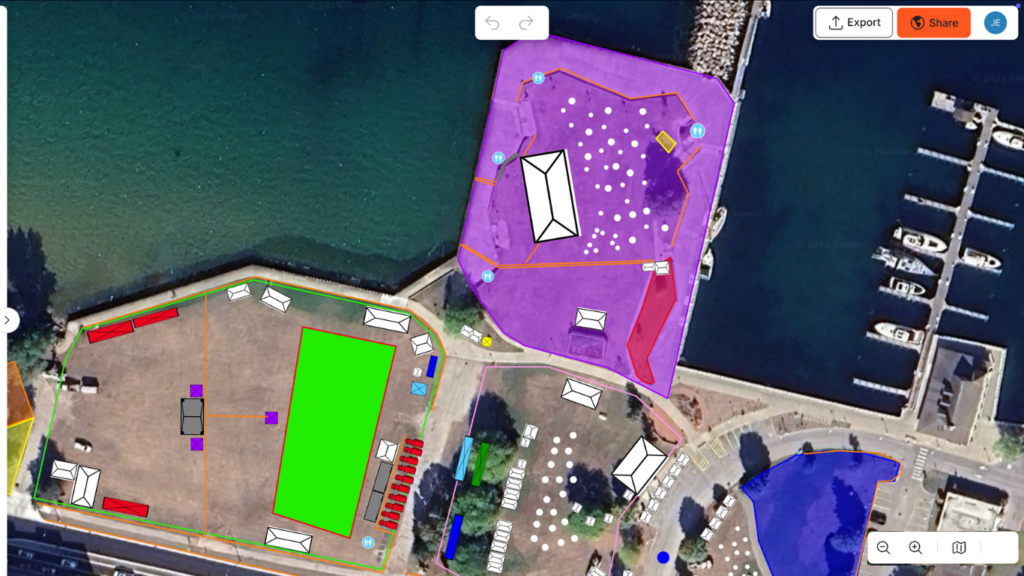
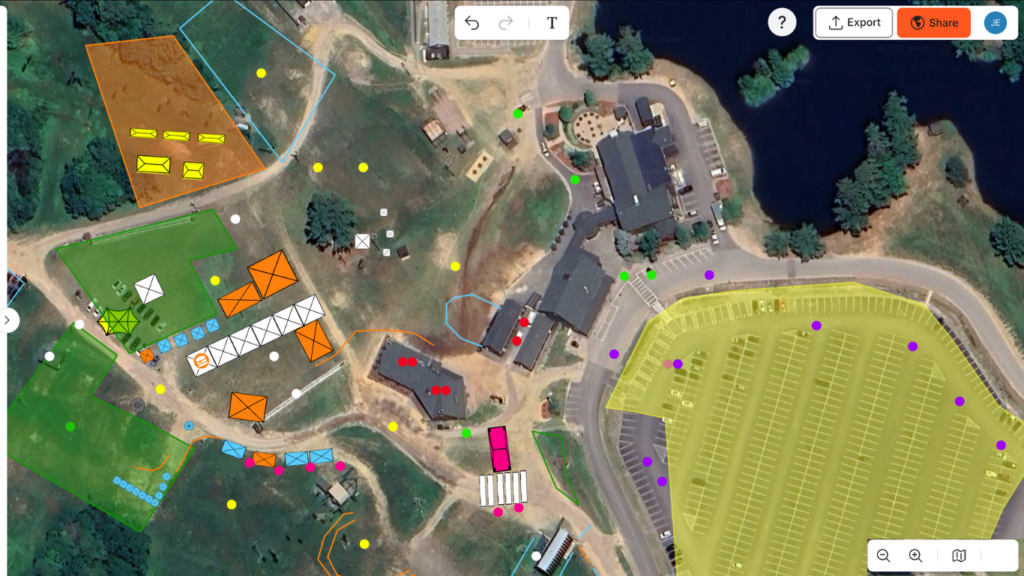
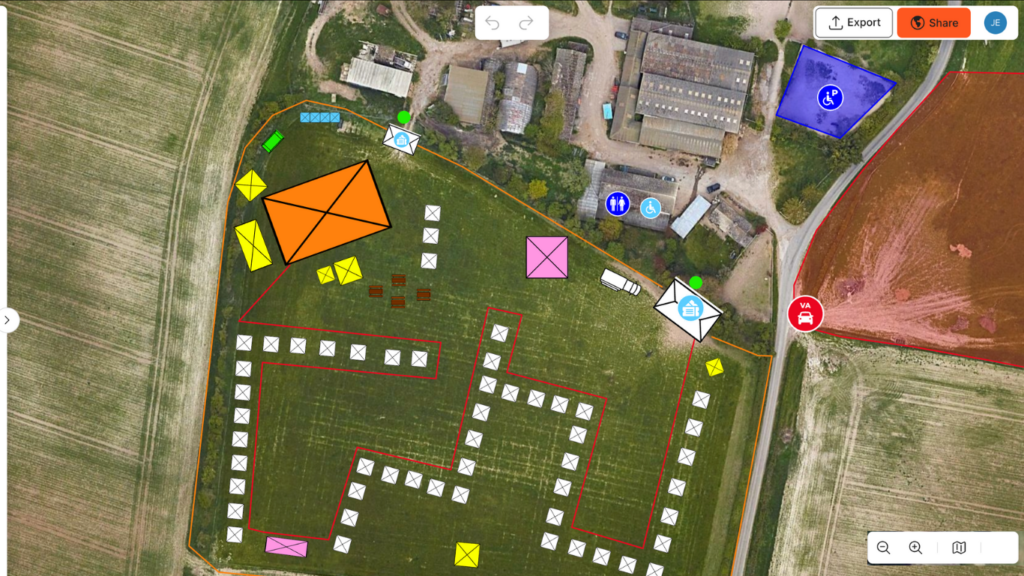
Since then, OnePlan has become the central planning platform for the tournament, bringing site layouts, infrastructure planning, vendor coordination, permitting, and commercial planning together in one place.

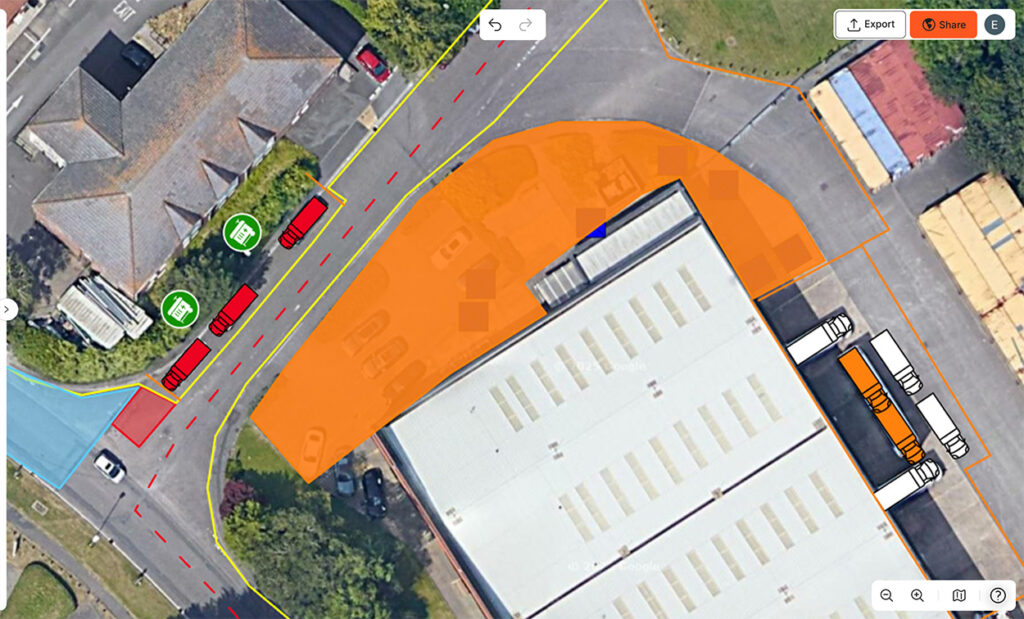
One of the capabilities Caden values most is the ability to import and overlay drone imagery. With the golf course located directly beside the Foundation’s offices, he can capture updated aerial photography, upload it into OnePlan, and immediately adjust plans as conditions change.

“Being able to overlay those drone shots myself, and not have to contact you guys and then wait, being able to just scale it and go for it myself was the biggest help,” he explains, “because I can just do something right away.”

Combined with CAD imports and a continuously updated digital site plan, the Foundation now maintains an accurate representation of the venue throughout the year, even as restoration work, infrastructure changes, and long-term development reshape the site.

The impact extends well beyond operations. Sales teams use OnePlan to visualise hospitality and sponsorship spaces for prospective clients, while vendors, contractors, and government authorities all access the same up-to-date layouts through view-only links.

Rather than relying on screenshots, PDFs, or static documents, stakeholders can explore the live plan directly, removing the need to return to operations for clarification.

"For an event bringing in nearly 200,000 square feet of infrastructure and over 10 miles of fencing, having OnePlan as a live operational platform is not a luxury, it's a necessity"

Caden Janzen,

Operations Coordinator, Heritage Classic Foundation

One Plan, Every Stakeholder

With OnePlan in place, the Heritage Classic Foundation now works from a single, continuously updated map of the entire event. This shift has changed not just how information is shared, but how the entire ecosystem around the tournament operates.

Everyone from the year-round operations team through to first-time vendors on site is now working from the same live environment. Power and HVAC crews, telecoms teams, broadcast operators, electrical contractors, and sanitation providers no longer rely on printed plans or outdated screenshots. Instead, they access a shared OnePlan link and navigate the course in context.

That visibility has removed a significant amount of day-to-day coordination. Questions that once triggered emails or phone calls are now often resolved instantly on site, simply because the answer is already visible in the plan.

For a team of just 14 overseeing an operation that scales to around 2,000 people during tournament week, the impact has been substantial. “We’ve probably eliminated, between the three of us, annually, approximately 1,000 phone calls and emails combined,” Caden says.

Onboarding has also become significantly smoother. In one instance, a brand-new power and HVAC supplier arrived on site with no prior experience of Harbour Town and was able to operate independently almost immediately.

"We work on this property year-round and know it like the back of our hand. OnePlan allows vendors to arrive on day one with that same understanding"

Caden Janzen,

Operations Coordinator, Heritage Classic Foundation

“I’m the one that oversaw them and there were virtually no phone calls,” Caden explains. “I just gave them the link and a couple of other layouts they needed, and they were able to use it.”

Permitting and Authority Alignment

The same shared visibility extends into permitting and public authority coordination.

Rather than submitting static documents and manually walking stakeholders through orientation and placement, the Foundation now shares a live, view-only version of the site with the town of Hilton Head and relevant fire and medical authorities.

Planners and engineers can see exactly how structures are positioned, how access routes flow, and how zones connect across the course without additional explanation.

“They will use OnePlan and get it all tied away, which then allows us not to sit there and go step by step with them,” Caden explains, “and tell them exactly where things are.”

What was previously a back-and-forth approval process has become a shared visual conversation grounded in a single source of truth.

Commercial Planning and Sponsorship Visibility

On the commercial side, the same live environment has reshaped how sponsorship and hospitality are sold.

Rather than presenting abstract footprints on static maps, the sales team can walk clients through a proportionally accurate, georeferenced view of the course itself.

Hospitality spaces are no longer just blocks on a diagram, they are real, navigable locations within the wider event landscape. Clients can understand scale, orientation, and sightlines in context rather than interpreting a flat drawing.

Allowing them to “show them a CAD without stressing them out with a full CAD,” as Caden puts it, has made conversations significantly more accessible. He adds that “showing them just kind of how we do it on OnePlan is a big help.”

The result is a more confident and informed commercial conversation, where stakeholders immediately understand the value and positioning of their space.

Features That Keep the Event Moving

Underpinning this shift is not a single capability, but a combination of tools that allow a constantly evolving venue to remain accurate, usable, and easy to interpret.

CAD imports ensure structural and architectural plans can be brought directly into the live environment without losing precision. Drone image overlays allow the team to refresh the entire site view whenever changes occur on the ground, particularly valuable for a venue that evolves through restoration, seasonal adjustments, and ongoing redevelopment.

“Google Maps and those maps do not update every six months,” Caden says. “They update every couple of years, or the ones that do update every year are not the highest quality. So being able to, when a change has happened, go in and do that myself quickly, that has become the biggest one.”

Alongside this, the object library brings clarity to complex infrastructure planning. Instead of generic blocks, the team can place identifiable objects for tents, platforms, stairs, elevators, power systems, telecoms, and sanitation, making layouts immediately understandable to anyone viewing them.

“Not having to just put a block out there, but being able to identify objects, right down to the elevator,” Caden explains.

Even performance plays a role. With constant updates during a four-month build window, responsiveness becomes critical rather than optional.

“The biggest thing I like about it is just the non-lagginess when you are dragging around the map,” he says. “It is very quick on responding and loading.”

A Shared Foundation for What Comes Next

Taken together, these capabilities remove friction between teams that have traditionally operated in parallel.

Operations, sales, vendors, and authorities are no longer working from separate documents and reconciling differences after the fact. Instead, they are interacting with the same live environment, each through their own lens but always grounded in the same underlying source of truth.

For the Heritage Classic Foundation, that alignment has become essential. It reduces duplication, removes ambiguity, and ensures that when something changes, as it inevitably does, it only needs to be updated once to be understood everywhere it matters.

Caden sums up that level of integration simply, saying, “I have a few tabs on my computer that I don’t close and OnePlan is one of them.”

And as the event continues to evolve, from annual course adjustments through to a multi-year resort redevelopment adjacent to the venue, OnePlan is becoming more than a planning tool, Caden explains, it is now the operational layer that underpins how one of the PGA Tour’s most complex events is designed, sold, and delivered year after year.

Ready to reduce 1,000+ calls and emails at your next event? See OnePlan in action and book a demo with one of our team >

Hit enter to search or ESC to close