
Written by: Paul Foster, Founder, CEO, OnePlan
Key Takeaways
- Qualifying UK venues and events must notify the SIA and meet tiered security obligations; there is no Protect Duty permit to obtain.
- Martyn’s Law (Terrorism (Protection of Premises) Act 2025) applies to publicly accessible premises and events expecting 200+ people, with standard tier (200–799) and enhanced tier (800+) requirements.
- Standard tier focuses on procedural readiness, including evacuation, invacuation, lockdown, and communication. Enhanced tier adds physical protection measures and mandatory documentation.
- Compliance begins in Spring 2027. Early preparation now on procedures, training, and site plans helps you avoid penalties up to £18 million.
- OnePlan helps event organizers create accurate, to-scale site plans, calculate crowd capacities, and generate SIA-ready documentation. Book a 15-minute demo to get started.
What Martyn’s Law Means for Public Events
Martyn’s Law is the UK’s first statutory baseline for counter-terrorism preparedness at publicly accessible premises and events. It applies to any premises that meet all of the following criteria:
- Contains at least one building accessible to the public
- Is wholly or mainly used for one of the 17 Schedule 1 uses, including entertainment, leisure, sports grounds, food and drink, retail, and visitor attractions
- Can reasonably expect 200 or more individuals, including staff, to be present at the same time at least occasionally
- Is not excluded under Schedule 2 of the Act
Premises that meet these criteria must comply with the relevant tiered duties. The law builds on the Protect and Prepare strands of the UK’s CONTEST counter-terrorism strategy. It sits alongside existing health and safety, fire safety, and licensing legislation.
Permit Status and Your Legal Obligation
No permit is required. The statutory guidance is explicit that Martyn’s Law does not create a permit application process. Qualifying premises and events must notify the SIA and comply with tiered duties.
The SIA is building a secure online notification portal. As of June 2026, the portal is not yet live. The law is expected to come into force in Spring 2027 after the minimum 24-month implementation period. Notification will only be possible once the portal opens. There is no fee for notification, and SIA inspections carry no charge.
Failure to comply once the law is in force can result in compliance notices, restriction notices, and significant financial penalties. However, you do not apply for or hold a Protect Duty permit at any stage.
Standard Tier Requirements (Capacity 200–799)
The standard tier applies to premises where 200–799 individuals, including staff, may reasonably be expected to be present at the same time. The focus is on procedural readiness rather than physical infrastructure. Standard tier premises do not need to install CCTV, barriers, or other physical security equipment.
Standard tier responsible persons must:
- Notify the SIA when the portal opens
- Ensure appropriate public protection procedures are in place, so far as reasonably practicable, covering evacuation, invacuation, lockdown, and communication
- Ensure staff are aware of those procedures and capable of carrying them out
For a small festival or community event in the UK, this might mean documenting your evacuation routes, identifying a safe invacuation area, and nominating a staff member to manage lockdown. You also need to establish how you will communicate with attendees and emergency services if an incident occurs. The Home Office describes these as simple, low-cost activities that can save lives.
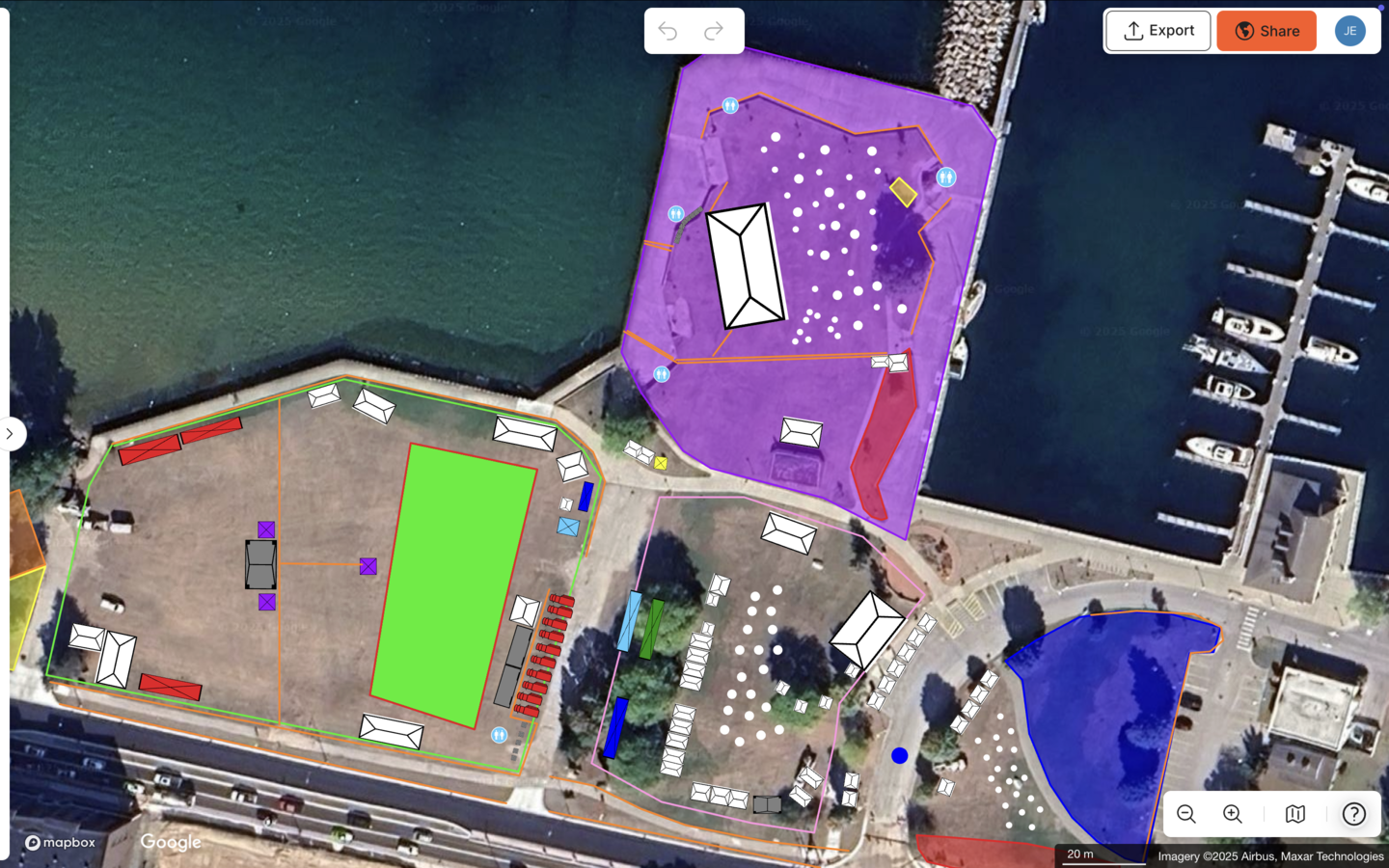
OnePlan’s to-scale, map-based planning tools help you document evacuation routes, mark emergency access points, and calculate standing crowd capacities. You can then share professional, defensible plans with your Safety Advisory Group and the SIA.
Enhanced Tier Requirements (Capacity 800+)
For larger venues and events, the enhanced tier raises the bar significantly. The enhanced tier applies to premises where 800 or more individuals, including staff, may reasonably be expected to be present at the same time, and to qualifying events where 800 or more people are expected at any point. All qualifying events are enhanced tier, regardless of the venue’s usual status.
Enhanced tier responsible persons must:
- Notify the SIA
- Implement all standard tier public protection procedures, including evacuation, invacuation, lockdown, and communication
- Implement appropriate public protection measures across four categories: monitoring, movement control, physical safety and security, and security of information
- Document all procedures and measures, including an assessment of how they reduce vulnerability and risk of harm, and provide that document to the SIA
- Designate a named senior individual accountable for compliance where the responsible person is an organisation
- Keep procedures and measures under ongoing review
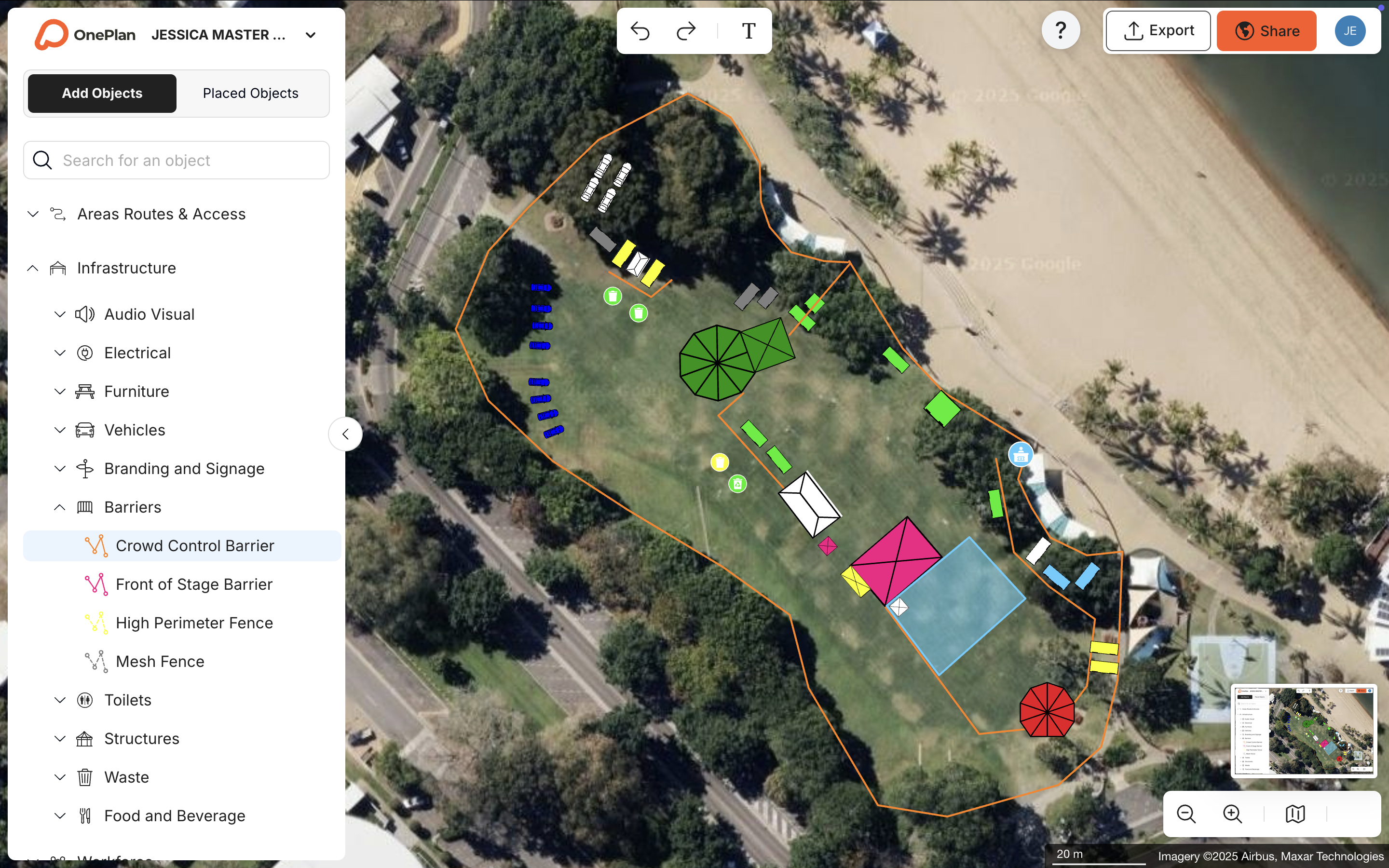
For large festivals, stadiums, and arenas, such as those planned by Silverstone and the Tour of Britain in OnePlan, the enhanced tier demands accurate, documented site layouts. OnePlan’s crowd capacity calculator, to-scale mapping, and auto-generated Bill of Quantities support these duties directly.
Standard vs. Enhanced Tier: Key Differences at a Glance
The table below highlights how the enhanced tier adds physical measures and documentation on top of the standard tier’s procedural duties. Once you know your tier, you can prepare for notification.
| Requirement | Standard Tier (200–799) | Enhanced Tier (800+) |
|---|---|---|
| SIA Notification | Required | Required |
| Public Protection Procedures (evacuation, invacuation, lockdown, communication) | Required with procedural focus, no physical measures needed | Required |
| Public Protection Measures (monitoring, movement, physical safety, information security) | Not required | Required, so far as reasonably practicable |
| Documentation Submitted to SIA | Not required | Required, including vulnerability assessment |
| Designated Senior Individual | Not required | Required where responsible person is an organisation |
How to Notify the SIA and Register
The SIA notification process will run through an online portal, currently under development. Responsible persons for qualifying premises will have a three-month window from the commencement date to submit their notification. For qualifying events, notification must be made within 14 days of the event date being first made publicly available.
Based on guidance published in July 2026, notifications will need to include:
- Details of the premises or event and its Schedule 1 use
- The maximum number of individuals reasonably expected to be present, and how that figure was calculated
- Whether the premises are standard or enhanced tier
- Co-ordination contacts for any other responsible persons sharing the premises
- Confirmation that the submitter is the responsible person or is authorised to act for them
- For enhanced tier: the public protection document
Monitor official SIA and GOV.UK channels for portal launch updates. Direct SIA enquiries to MLR@sia.gov.uk.
Compliance Timeline and Enforcement
The Terrorism (Protection of Premises) Act 2025 received Royal Assent on 3 April 2025, with a minimum 24-month implementation period, making the earliest possible enforcement date April 2027. The SIA has confirmed it plans to begin regulating in Spring 2027.
Once in force, the SIA can issue compliance notices, restriction notices, and financial penalties. Enhanced tier penalties can reach £18 million or 5% of worldwide annual turnover, whichever is higher, plus a daily continuing penalty of up to £50,000 for ongoing non-compliance. The SIA has stated it will focus initially on education and support, reserving enforcement for those who pose the greatest risk or deliberately avoid compliance.
The practical preparation window is shorter than the headline suggests. For multi-site organisations, preparing procedures, training staff, running exercises, and assembling documentation can take six to twelve months. Because that work must be done before the law takes effect, starting now is the right call.
How OnePlan Supports Your Protect Duty Planning
OnePlan is used by event organizers and venue teams across the UK, from community festivals to Formula 1 circuits, to create accurate, collaborative site plans that support safety compliance. Its features align closely with Protect Duty requirements.
- To-scale, map-based site layouts: every object placed on OnePlan’s live satellite map stays accurately to scale, so your evacuation routes, crowd areas, and security infrastructure match how your site will look on the ground.
- Standing crowd capacity calculator: outline any crowd area and instantly see its safe standing capacity, creating defensible figures for your vulnerability assessment and SIA documentation.
- Bill of Quantities: every object on your map, including barriers, fencing, and security posts, auto-generates an exportable inventory so your procurement and documentation stay aligned.
- Real-time collaboration: your operations, security, and safety teams all work in the same live plan, which removes the version-control issues that come with emailed PDFs.
- Professional export: produce high-resolution, print-ready maps for Safety Advisory Group meetings and SIA documentation.
To see how these features work together, consider a festival organizer planning a 5,000-capacity event. They can map crowd zones, calculate standing capacities, plot security patrol routes, mark evacuation exits, and export a complete site plan. All of this happens in one browser-based platform, with no engineering background required.
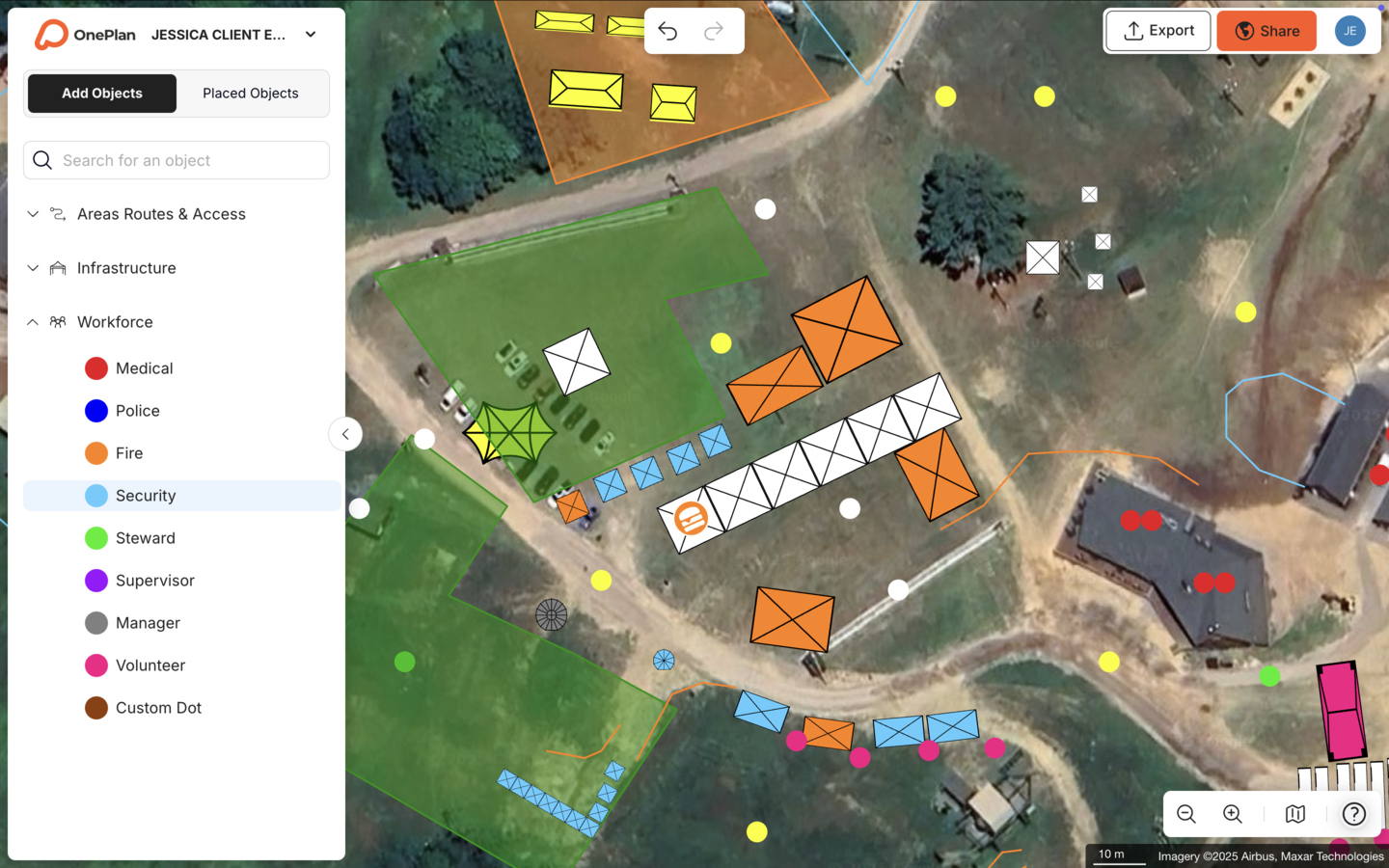
That level of documented, evidence-based planning matches what the enhanced tier expects. See how SoulFest cut planning time by 85% using OnePlan, or how Silverstone achieved a 13x ROI planning the British Grand Prix and 50+ events a year on a single source of truth.
For more on how OnePlan supports venue safety planning ahead of Martyn’s Law, read how OnePlan enables better safety at venues ahead of Martyn’s Law. Book a 15-minute demo to see OnePlan in action and explore how it can support your Protect Duty planning.
Frequently Asked Questions
Is There a Protect Duty Permit?
No. Martyn’s Law does not create a permit application process. Qualifying premises and events must notify the Security Industry Authority (SIA) and comply with tiered security duties, either standard or enhanced, depending on expected capacity. The SIA notification portal is expected to open in Spring 2027, when the law comes into force, and there is no fee for notification.
What Is the Capacity Threshold for the Standard Tier?
The standard tier applies to premises where 200–799 individuals, including staff, may reasonably be expected to be present at the same time, at least occasionally, for a Schedule 1 qualifying use. The threshold is based on realistic expected occupancy rather than theoretical maximum capacity. Premises that occasionally exceed 799 people may move into the enhanced tier. There is no “standard tier event” category, because all qualifying events with 800+ expected attendees and controlled entry are automatically enhanced tier.
When Does Martyn’s Law Come Into Force?
The Terrorism (Protection of Premises) Act 2025 received Royal Assent on 3 April 2025. The government committed to a minimum 24-month implementation period, so the substantive requirements are expected to come into force in Spring 2027. There is no legal obligation to comply until commencement, but the SIA strongly encourages early preparation because building procedures, training staff, and assembling documentation can take six to twelve months for larger organisations.
Who Enforces Protect Duty?
The Security Industry Authority (SIA) is the designated regulator for Martyn’s Law. It has powers to inspect premises and events, issue compliance notices and restriction notices, and impose financial penalties. Senior leaders at enhanced tier organisations can face personal criminal liability in serious cases. The SIA has stated it will take a supportive, proportionate approach initially, focusing enforcement on those who pose the greatest risk or deliberately avoid compliance.
Do I Need to Register If My Event Has Fewer Than 200 People?
No. Premises or events where fewer than 200 individuals are reasonably expected to be present fall outside the scope of Martyn’s Law. Good security practice, including documented evacuation and communication procedures, still makes sense regardless of size. If your event grows in future years and crosses the 200-person threshold, you will need to assess your obligations at that point.
How Can I Prepare for Protect Duty Right Now?
Start by assessing your realistic maximum expected occupancy to determine whether you fall within the standard or enhanced tier. Then develop your public protection procedures, including evacuation, invacuation, lockdown, and communication, tailored to your specific site. For enhanced tier, begin your terrorism vulnerability assessment and identify appropriate physical measures. Create accurate, to-scale site plans that document your crowd areas, emergency routes, and security infrastructure. Tools like OnePlan let you build those plans collaboratively, calculate standing crowd capacities, and export professional documentation for your Safety Advisory Group and the SIA, all from a browser with no specialist training required.
Your Next Steps to Compliance
Under Martyn’s Law, qualifying premises and events must notify the SIA and meet tiered security duties, with procedural duties for the standard tier and both procedural and physical duties for the enhanced tier. Enforcement is expected from Spring 2027, and the preparation window is open now.
The most effective actions today are to assess your tier, start building your public protection procedures, and create accurate, to-scale site plans that document your safety measures. That documentation is good practice for all venues and a legal requirement for enhanced tier premises and events.
Plan your next event in a way that supports Protect Duty compliance. Ready to build your compliance-ready site plan? Book a 15-minute demo to see OnePlan in action.